Subscribe to Our Newsletter
To get the latest tips and news to support your well-being journey!


Some stress arrives loudly - a difficult meeting, a tense conversation, an unexpected bill. Other stress is quieter and more draining, building through small moments you barely register until your patience is gone, your sleep is off, and everything feels harder than it should. If you have been wondering how to manage stress triggers, the first shift is this: stop treating stress as random. It usually follows patterns, and once you can see them, you can start changing your response.
Stress triggers are not just "big problems". They can be environments, people, thoughts, physical states, or even positive changes that demand adaptation. A packed inbox, poor sleep, unresolved conflict, sensory overload, money worries, social pressure, perfectionism - all of these can act as triggers. What affects one person mildly may affect another intensely, which is why generic advice often falls flat.
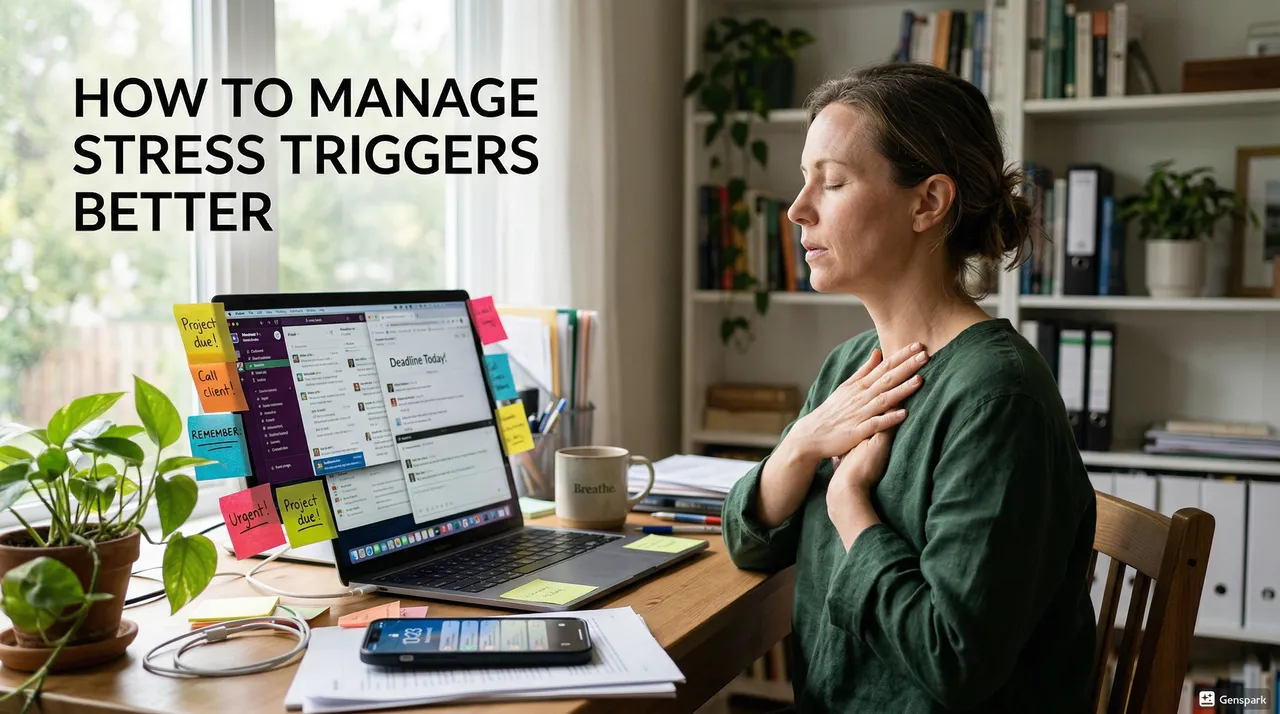 What stress triggers really are
A stress trigger is anything that activates your mind and body into a state of pressure, alertness, or overwhelm. Sometimes that activation is useful. It helps you prepare, focus, and respond quickly. The trouble begins when the trigger is constant, poorly understood, or linked to habits that leave you stuck in a cycle of tension.
This is why learning how to manage stress triggers is less about controlling every situation and more about recognising what happens before your stress spikes. The trigger itself matters, but so does your starting point. If you are already running on little sleep, skipping meals, and carrying emotional strain, a minor inconvenience can feel enormous.
That is also where self-judgement can make things worse. Many people tell themselves they should be able to cope better. In reality, stress management works best when it starts from observation rather than criticism. You are not trying to win against your nervous system. You are trying to understand what it is reacting to.
Before you can manage a trigger, you need to spot it accurately. That sounds obvious, but many people identify the last thing that happened rather than the full chain. For example, you might say your stress was caused by a short email from your manager. But the fuller picture may include poor sleep, back-to-back calls, hunger, and a fear of disappointing people in authority.
A useful approach is to track a few stressful moments over one or two weeks. Keep it simple. Note what happened, where you were, who was involved, what you felt in your body, what thoughts showed up, and what you did next. Patterns tend to emerge quickly.
You may notice that your triggers fall into a few broad groups. External triggers include workload, deadlines, noise, family demands, commuting, or uncertainty. Internal triggers often involve beliefs and expectations, such as needing to get everything right, fearing conflict, or assuming the worst before it happens. Physical triggers matter too. Dehydration, hunger, hormonal changes, pain, and lack of movement can all lower your stress threshold.
Once you can name your triggers, they usually feel less mysterious. That does not make them pleasant, but it gives you options.
When a trigger hits, most people try to think their way out of stress while their body is still in a reactive state. It is often more effective to regulate first and analyse later. The immediate goal is not to feel wonderful. It is to create enough steadiness to choose your next step.
Start with the body. Slow your breathing slightly, relax your jaw, drop your shoulders, and place both feet on the floor. If possible, step away from the trigger for a minute or two. A brief pause can prevent an automatic reaction that adds more stress later.
Then reduce the scope of the problem. Ask yourself, what needs attention in the next ten minutes? Stress tends to widen everything. It tells you that your whole day, job, relationship, or future is under threat. Narrowing the frame helps your brain return to what is actually manageable now.
Language matters here. Replacing "I cannot handle this" with "I am stressed, and I can take this one step at a time" is not empty positive thinking. It is a more accurate instruction. You may still feel pressure, but your response becomes less chaotic.
If your trigger is interpersonal, delay any important reply until you are calmer. That might mean drafting a message and returning to it later, or saying, "I want to respond thoughtfully, so I am going to come back to this." Space is often protective.
Managing stress is not only about crisis moments. Often the best results come from reducing the frequency or intensity of triggers before they escalate.
This may involve practical boundaries. If constant notifications leave you on edge, turn off non-essential alerts and check messages at set times. If your mornings feel frantic, prepare a few things the night before. If certain people reliably drain your energy, shorten the interaction, change the setting, or be clearer about what you can and cannot offer.
It may also mean changing the standards you live by. Perfectionism is a powerful stress trigger because it turns ordinary tasks into constant evaluations of your worth. High standards can be healthy, but when every task feels like a test, your nervous system rarely gets to stand down. Sometimes "done well enough" is the more resilient choice.
There is a trade-off here. Reducing triggers does not always feel comfortable at first. Setting boundaries may disappoint someone. Delegating may challenge your identity. Resting may bring up guilt if you are used to measuring yourself by productivity. But short-term discomfort can create long-term stability.
One of the most overlooked parts of stress management is capacity. The same trigger feels very different when you have a buffer. That buffer comes from routines that support your body and mind consistently, not perfectly.
Sleep is usually the first lever. Poor sleep makes emotional reactions sharper and recovery slower. Food and hydration matter as well. So does movement, especially if your work keeps you at a desk. These basics are not glamorous, but they are often the difference between manageable stress and total overload.
Mental buffer matters too. That might look like leaving ten minutes between meetings, taking a proper lunch break, limiting doomscrolling, or creating a short evening routine that tells your brain the day is ending. Small rituals can reduce the background noise that keeps stress simmering.
Connection is another form of buffer. Many adults try to manage everything privately until they reach breaking point. Talking with someone you trust can lower the intensity of stress simply by making it less isolating. If your triggers are recurring, complex, or linked to anxiety, burnout, trauma, or relationship strain, structured support can make a real difference. Working with the right specialist gives you space to understand patterns, practise healthier responses, and build strategies that fit your life.
Not every trigger can be solved with better habits. Sometimes recurring stress is a sign that something more significant needs attention. You may be in a role that no longer fits, a relationship dynamic that keeps you tense, or a lifestyle pattern that is fundamentally unsustainable.
This is where honesty matters. If you are constantly triggered by your workload, the answer may not be becoming even more efficient. It may be that your workload is unrealistic. If you are regularly overwhelmed by social settings, the issue may not be that you need to push through harder. You may need stronger boundaries, more recovery time, or support for underlying anxiety.
There is no failure in needing help to untangle this. In fact, support is often what turns insight into change. Platforms such as SympathiQ make that process more accessible by connecting people with specialists across mental wellbeing, burnout support, fitness, and nutrition in one place, which can be especially helpful when stress is affecting several areas of life at once.
If you want to know how to manage stress triggers well, think less about becoming unaffected and more about becoming responsive. You are not aiming to remove every difficult feeling. You are building the ability to notice what is happening, steady yourself, and respond in a way that protects your wellbeing.
Some weeks you will handle triggers skilfully. Other weeks old patterns will return. That is normal. Progress in stress management is rarely dramatic. More often, it looks like catching yourself earlier, recovering faster, and treating yourself with more care while you do.
The next time stress flares, try not to ask, "What is wrong with me?" Ask, "What is this reaction trying to show me?" That question can be the first real step towards relief.
Your email address will not be published. Required fields are marked *