Subscribe to Our Newsletter
To get the latest tips and news to support your well-being journey!
Find the right specialist for youFind a Specialist

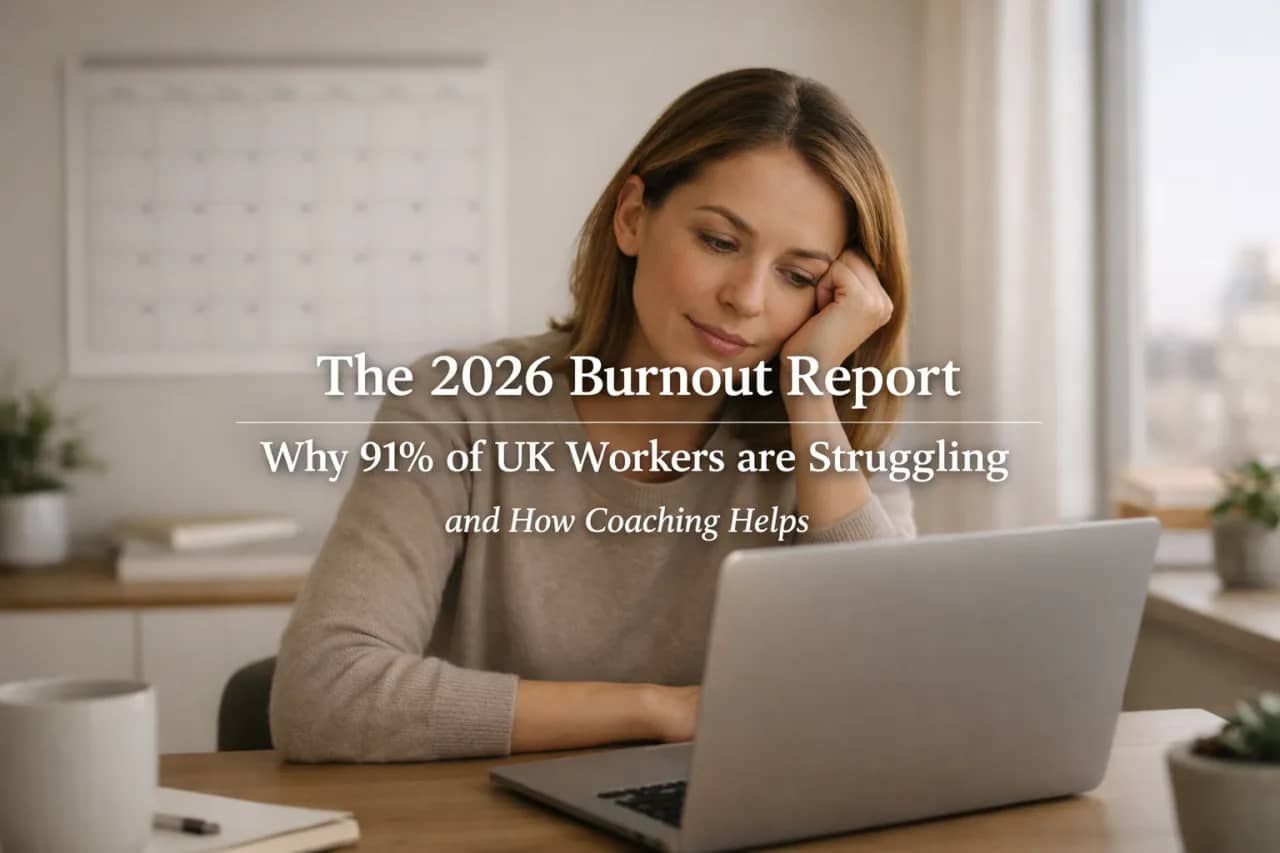
It’s March 2026, and if you’re reading this while feeling a slight tightening in your chest or looking at a calendar that feels more like a battlefield than a schedule, you aren't alone. In fact, you’re in the overwhelming majority.
The data is finally in for the start of the year, and the numbers are, quite frankly, staggering. Our latest 2026 Burnout Report has revealed a landscape that many of us felt instinctively but hadn't yet quantified: 91% of UK adults have experienced high or extreme levels of stress over the past twelve months.
We’ve moved past the "post-pandemic adjustment" phase. We are now living in a systemic era of exhaustion. But why, despite all our technological advancements and supposed "flexible" working hours, are we hitting a wall harder than ever before? At SympathiQ, we’ve been digging into the mechanics of this crisis, and it turns out that the traditional ways we try to "fix" burnout are actually making it worse.
Let’s dive into what’s actually happening in the UK workforce and how we can stop the cycle.
When we look at the numbers, it’s clear that the UK is facing a mental health "perma-crisis." It’s no longer just about a few busy weeks at the end of the quarter; it’s a foundational shift in how we function, or fail to function, at work.
The 91% Stat: Nearly every single professional you pass on the street is currently navigating extreme stress. This isn't just "having a bad day"; this is the kind of stress that affects sleep, physical health, and cognitive function.
The Absenteeism Reality: 20% of UK workers, one in five, have had to take time off work in the last year specifically due to stress-related mental health challenges.
The Support Gap: Perhaps the most telling statistic is that only 27% of employees feel they receive sufficient support from their employers.
We see a massive disconnect here. Companies are spending more than ever on "wellness," yet the people on the ground feel more isolated and unsupported than they did two years ago.
Decoding the "Productivity Doom Loop"
Have you ever felt like you’re running a marathon just to stay in the same place? That is the Productivity Doom Loop.
As stress levels rise, our cognitive efficiency drops. We start making small mistakes, our focus wavers, and tasks that used to take an hour now take three. To compensate, we work longer hours, skip lunch, and stay "always on" late into the evening. This leads to more exhaustion, which further degrades our productivity, forcing us to work even to keep up.

Your email address will not be published. Required fields are marked *
This loop is fueled by an "always-on" culture where the boundaries between home and office have effectively evaporated. We’ve traded the commute for a 7:00 AM Slack notification and the office watercooler for back-to-back Zoom calls that leave no room for actual deep work.
Unmanageable Workloads: The expectation to do more with less has become the standard, not the exception.
Lack of Autonomy: Many of us feel like cogs in a machine, with very little say over how or when we do our work.
Isolation: Despite being "connected" digitally, the breakdown of genuine workplace community means we lack the emotional safety net that used to catch us when we stumbled.
If you think burnout is only for the seasoned executives, think again. The 2026 data shows that 83% of Gen Z frontline employees are reporting burnout symptoms, significantly higher than their older counterparts.
Why is this happening? Gen Z entered a workforce that was already fractured. They haven't had the years of "in-person" mentorship or the luxury of clear work-life boundaries. They are the most digitally connected generation in history, but also the most prone to the "comparison trap" and the pressure of constant availability.
When the youngest members of our workforce are already exhausted before they’ve even hit their 30th birthday, we aren't just looking at a current problem, we’re looking at a future talent crisis.
We need to have an honest conversation about the current state of workplace perks. For years, the corporate response to burnout has been what we call "Wellness Washing."
You know the drill: a free subscription to a meditation app, a bowl of fruit in the breakroom, or perhaps the occasional "Yoga Friday." While these things are nice, they are the equivalent of putting a colorful Band-Aid on a broken leg.
When a worker is part of that 91% experiencing extreme stress, they don't need a breathing exercise; they need a structural change in how they manage their workload, their boundaries, and their mental energy. The reason only 27% of people feel supported is that these perks feel "fluffy" and performative. They don't address the root causes of the stress.
If you think burnout is only for the seasoned executives, think again. The 2026 data shows that 83% of Gen Z frontline employees are reporting burnout symptoms, significantly higher than their older counterparts.
Why is this happening? Gen Z entered a workforce that was already fractured. They haven't had the years of "in-person" mentorship or the luxury of clear work-life boundaries. They are the most digitally connected generation in history, but also the most prone to the "comparison trap" and the pressure of constant availability.
When the youngest members of our workforce are already exhausted before they’ve even hit their 30th birthday, we aren't just looking at a current problem, we’re looking at a future talent crisis.
This is where the shift needs to happen. We need to move away from passive perks and toward active support.
At SympathiQ, we believe that coaching is the antidote to the Productivity Doom Loop. Unlike a generic HR manual or a meditation app, coaching provides a human-to-human connection focused on concrete, actionable strategy.
A coach helps you look at your "unmanageable" workload and find the leverage points. It’s about learning to say "no" strategically, setting boundaries that actually stick, and reclaiming control over your schedule.
We often don't realize we're burning out until we've already hit the wall. Coaching acts as an early warning system. By checking in regularly with a SympathiQ coach, you learn to identify the physical and emotional cues of stress before they turn into a mental health leave of absence.
If you’re struggling with a toxic manager or a breakdown in team communication, a breathing app won’t help you. A coach will. We provide the tools to navigate workplace politics and interpersonal conflict: the very things that cause the "perceived unfairness" that leads to burnout.
We can’t just wait for the world to get less stressful. The reality of 2026 is that the pace of work is only going to accelerate. The secret isn't to work faster; it’s to build a more resilient system for yourself and your team.
If you’re a leader: Stop looking at wellness as a "check-box" exercise. Consider that 20% of your staff might be one bad week away from taking leave. Investing in professional coaching for your team isn't just "nice to have"; it’s a strategic imperative to protect your most valuable asset: your people.
If you’re an individual: Recognize that being part of the 91% isn't inevitable. You don't have to accept constant exhaustion as the price of a career. It’s time to move beyond the "hustle" and toward a model of sustainable performance.
The "Productivity Doom Loop" only ends when we decide to step off the wheel. We need to demand more than just "perks." We need real support, real conversations, and real tools to manage the complexities of modern work.
At SympathiQ, we’re here to provide exactly that. Our coaches are trained to help UK professionals navigate this exact landscape, turning the tide on burnout one session at a time.
Are you ready to be part of the 27% who actually feel supported? Let’s stop talking about burnout and start doing something about it.
 What do you think? Does the "Productivity Doom Loop" sound familiar to you? We’d love to hear your thoughts on how your workplace is: or isn't: supporting you this year. Let’s start the conversation that actually leads to change.