Subscribe to Our Newsletter
To get the latest tips and news to support your well-being journey!


Trying to eat well when your calendar is full, your energy is low and every bit of advice online seems to contradict the last can feel exhausting. A personalised meal plan online changes that by replacing guesswork with structure that actually fits your life, your preferences and your goals.
For many people, the problem is not motivation. It is friction. You might want to feel more energised, support fitness goals, improve digestion or stop relying on convenience food after long workdays. But if your eating plan ignores your routine, stress levels, budget or relationship with food, it rarely lasts. Personalisation matters because real life matters.
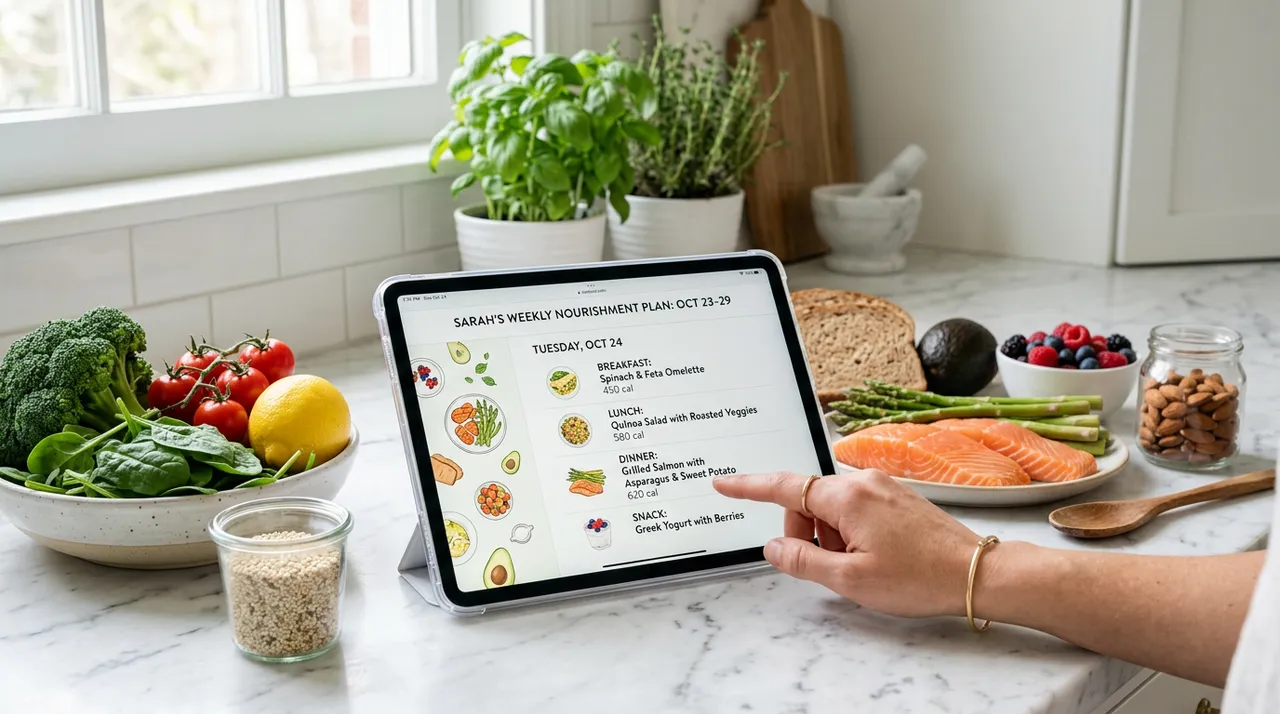
At its best, a personalised meal plan online is not a rigid menu telling you exactly what to eat forever. It is a practical framework built around your needs. That can include your health goals, dietary requirements, cooking confidence, schedule, food preferences and even how much mental space you have for planning meals.
This is where online support can be especially helpful. Instead of starting from a generic PDF or a trend on social media, you can work from guidance that reflects your current reality. If you travel for work, hate batch cooking, need family-friendly ideas or want meals that support training without taking over your week, the plan should account for that.
Personalisation also helps remove the all-or-nothing thinking that often derails progress. A useful plan does not assume every week will be perfect. It gives you options for busy days, lower-energy evenings and moments when life becomes unpredictable.
Generic plans tend to look tidy on paper and messy in practice. They often assume you have the same appetite every day, the same access to ingredients, the same amount of time to cook and the same goals as everyone else. That is rarely true.
A person managing burnout may need something very different from someone training for a half marathon. Someone trying to improve blood sugar balance may need a different structure from someone who simply wants to stop skipping lunch. Even two people with the same goal, such as weight management, may need completely different approaches depending on stress, sleep, medical history and daily routine.
There is also the issue of sustainability. A meal plan can look healthy and still be unrealistic. If it depends on complicated recipes, expensive ingredients or constant food prep, it can become another source of pressure rather than support.
One of the biggest advantages of a personalised meal plan online is not only nutrition. It is mental relief.
When you already spend your day making decisions, food can become one more draining task. Deciding what to buy, what to cook and whether what you are eating is “right” can quietly chip away at your energy. A personalised plan reduces that load. You know what you are aiming for, what your fallback options are and how to make choices without overthinking every meal.
That is particularly valuable for busy professionals and anyone feeling stretched. Healthy habits become much easier to maintain when they are built into your week instead of competing with everything else in it.
The phrase covers a wide range of needs, which is exactly why personalisation matters. For some people, the focus is fat loss or muscle gain. For others, it is better digestion, hormone support, improved energy or a calmer relationship with food.
If your goal is performance, your plan may need to consider meal timing, protein intake and fuelling around exercise. If your goal is stress recovery, it may be more useful to focus on consistency, balanced meals and practical ways to avoid long gaps without eating. If you are managing a health condition or food intolerance, the right structure becomes even more important.
This is also why one-size-fits-all nutrition advice can feel frustrating. What works brilliantly for one person may be unhelpful, or even counterproductive, for another. Good support meets you where you are and helps you move forward from there.
Not every service offering a personalised meal plan online delivers the same level of care. Some are little more than automated templates with your calorie target dropped in. Others take a more thoughtful approach and consider your wider wellbeing.
Look for a service that asks meaningful questions before making recommendations. Your goals matter, but so do your routines, preferences and barriers. If a provider does not ask about these, the plan may not be as personalised as it claims.
Flexibility is another good sign. A strong plan should adapt as your life changes. If you hit a stressful patch at work, start a new fitness routine or realise you need simpler meals than expected, your support should evolve too.
It also helps when nutrition is treated as part of a bigger picture. Eating habits are shaped by sleep, stress, workload, mindset and emotional wellbeing. A platform such as SympathiQ can feel useful here because it sits within a broader model of support rather than treating food in isolation.
There is a common assumption that once you have a tailored plan, everything should click instantly. In reality, even the best plan may need adjusting.
You might learn that you need quicker breakfasts than you thought. You might discover that evening snacking is less about hunger and more about stress or habit. You might start with ambitious cooking plans and then realise that simpler meals are what help you stay consistent.
That is not failure. It is useful information. The purpose of personalisation is not to create a flawless plan on day one. It is to create something responsive enough to keep working as you learn more about what supports you.
This matters because long-term progress usually comes from small changes you can repeat, not a short burst of perfection.
Information alone is rarely the issue. Most people already know the broad basics of healthy eating. The challenge is applying them consistently when life gets busy or motivation dips.
That is where accountability can make a real difference. With the right online support, you are not left alone with a document and a good intention. You have guidance, feedback and someone helping you turn advice into habits that feel manageable.
For some people, accountability means regular check-ins. For others, it means having a plan they genuinely want to follow because it feels realistic rather than punishing. Both matter. A plan that respects your capacity is often easier to stick to than one that demands constant discipline.

It depends on what you need.
If you enjoy planning meals, feel confident about nutrition and only need a few fresh ideas, you may not need much support. But if food feels confusing, inconsistent or emotionally loaded, a personalised approach can save time, reduce stress and help you make steadier progress.
It can also be especially worthwhile if you have tried multiple plans before and struggled to maintain them. Often, that is not because you lacked willpower. It is because the plan was not built for your life.
The value is not only in what to eat. It is in having a clearer path, fewer daily decisions and support that feels aligned with your goals instead of fighting against your routine.
The best meal plan is not the strictest or the most impressive. It is the one that helps you feel better and keeps working on ordinary Tuesdays.
That might mean repeating simple lunches, relying on easy staples during stressful weeks or choosing progress over precision. A personalised meal plan online should give you structure without making food feel like another source of pressure. It should support your wellbeing, not take over it.
If you have been stuck between wanting to eat better and not knowing how to make it realistic, taking the first step towards personalised support can bring a surprising amount of clarity. Sometimes what changes everything is not more effort. It is having a plan that finally fits.

Your email address will not be published. Required fields are marked *
Intermittent fasting compresses eating into a shorter window (commonly 8 hours, fasting the other 16). It simplifies meal planning for some people and can improve how the body handles insulin, but it's a genuinely poor fit for anyone with a history of disordered eating, and it doesn't suit everyone's schedule or hunger patterns.
Keto (very low carb, high fat) pushes the body toward burning fat for fuel. Some people see fast initial results and better appetite control; the trade-offs are an adjustment period some describe as "keto flu," real difficulty sustaining it long-term, and a need to watch saturated fat intake carefully rather than assuming "high fat" is automatically fine.
Plant-based eating is well-supported for heart health when done with whole foods rather than ultra-processed vegan substitutes — the planning risk is under-shooting protein, B12, and iron if it's not put together deliberately.
Mediterranean-style eating (fish, olive oil, whole grains, plenty of vegetables, moderate everything else) has the strongest long-term evidence behind it, largely because its variety makes it easier to actually stick with for years, not weeks.
None of these are "the answer." The one that works is the one you're still doing in six months.
Planning ahead is the single biggest lever against last-minute takeaways and random snacking — not because willpower fails, but because decision fatigue is real, and having a plan removes hunger-driven decisions from the equation entirely.
A realistic version: a rough weekly plan for what you're eating (not down to the gram), batch-cooking a protein source or two at the start of the week, and pre-portioning lunches if you know weekday mornings are chaotic. None of this needs to be elaborate — a repertoire of four or five genuinely quick meals you can make without thinking is worth more than an ambitious meal-prep Sunday you rarely get through.
Reaching for food when stressed, bored, or low isn't a character flaw — it's an extremely common, understandable pattern, and the occasional comfort meal isn't the problem. What matters is whether it's the only coping mechanism available. If work stress, poor sleep, or anxiety are consistently driving eating patterns rather than actual hunger, that's worth naming directly rather than only addressing through food.
This is also where nutrition and mental health genuinely overlap — chronic stress raises cortisol, which itself affects appetite and where the body stores fat, and poor sleep disrupts the hunger hormones (ghrelin and leptin) that regulate whether you feel satisfied. Treating diet as separate from stress and sleep usually means treating the wrong variable.
Self-directed nutrition changes work for a lot of people, but a few situations are worth professional input rather than another app or article:
A diagnosed condition (diabetes, kidney issues, a significant food intolerance) where getting it wrong has real consequences
A pattern of yo-yo dieting that keeps repeating despite genuine effort
Suspected hormonal factors (thyroid issues, PCOS, menopause) affecting weight in ways diet alone doesn't explain
Overeating or restriction that seems to be masking something else — anxiety, depression, or a difficult relationship with food that goes beyond "eating better"
In the UK, "nutritionist" isn't a legally protected title, while "dietitian" is — worth knowing the difference and checking credentials against a real professional body (AfN or BANT for nutritionists, HCPC for dietitians) before booking anyone, the same way you would with a therapist or coach.
Most people don't fail at nutrition because they lack information — there's more of it available than ever, often contradictory. What actually determines results is consistency over a long enough period, which is exactly why the most sustainable approach is usually less dramatic than it sounds. are checked against a real professional body before they can take a client, and it's pay-per-session — useful if you want a few sessions of real guidance without committing to an ongoing programme before you know if it's the right fit.
Do I need to count calories to lose weight? Not necessarily — portion awareness and protein-forward meals get a lot of people most of the way there without formal tracking. Tracking can help short-term for building awareness of actual intake, but isn't something most people need to sustain indefinitely.
Which diet is actually the best for weight loss? There's no universally best one — the evidence consistently shows adherence matters more than the specific approach. The best diet is the one you can realistically sustain for months, not the one with the fastest short-term results.
Is intermittent fasting safe for everyone? No — it's a poor fit for anyone with a history of disordered eating, and isn't automatically appropriate during pregnancy or with certain medical conditions. Worth checking with a GP or dietitian if you're unsure it applies to you.
When should I see a dietitian instead of just changing my diet myself? If you have a diagnosed condition affected by diet, a repeating pattern of regaining weight despite real effort, or suspect a hormonal factor is involved, professional input is worth the investment rather than another self-directed attempt.

If you are weighing up a dietitian vs nutrition coach decision, you are probably not looking for theory. You want to know who can actually help you feel better, eat with less stress, and make progress that lasts. The tricky part is that both can support healthier habits, but they do not do the same job.
This is one of those choices that looks simple until your real life gets involved. Maybe you are managing IBS, high cholesterol, emotional eating, burnout, menopause symptoms, or a packed work schedule that keeps knocking your intentions off course. In those cases, picking the right kind of support matters - not because one is better than the other, but because the fit needs to match your goals, health needs and level of complexity.

At the simplest level, a dietitian is a regulated health professional trained to give evidence-based nutrition care, including support for medical conditions. A nutrition coach usually focuses on behaviour change, accountability and practical habit-building around food and lifestyle.
That distinction shapes everything else.
A dietitian is often the right choice when nutrition is tied to your health in a clinical or therapeutic way. That might include diabetes, coeliac disease, digestive issues, food allergies, PCOS, high blood pressure, eating disorder recovery support within their scope, or malnutrition risk. Their advice is grounded in professional regulation, formal training and clinical assessment.
A nutrition coach, by contrast, is often the better fit when you know what you "should" be doing but struggle to do it consistently. They may help you plan meals around a hectic job, build a better relationship with snacking, increase protein intake, prepare for fitness goals, or stay accountable as you create more sustainable routines.
Neither role is automatically the answer for everyone. The real question is whether you need clinical nutrition care, behavioural support, or a mix of both.
Dietitians are trained to work where food and health overlap in a more complex way. They assess symptoms, medical history, medications, blood test results where relevant, and nutritional needs. Their recommendations are usually tailored not just to your preferences, but to your condition, risks and treatment plan.
If you have a diagnosed condition, recurring symptoms, or have been told by a GP or consultant to change your diet, a dietitian is usually the safer starting point. The same applies if you are confused by conflicting advice online and want a plan based on actual clinical reasoning rather than trends.
Dietitians can also be especially valuable when your nutrition needs are changing. Pregnancy, postnatal recovery, peri-menopause, ageing, fatigue, digestive flare-ups and recovery from illness can all benefit from professional oversight. What looks like a simple eating issue on the surface can sometimes have a more complicated root.
That does not mean working with a dietitian has to feel medical or intimidating. A good one will still meet you where you are, respect your lifestyle and help you make realistic changes. The difference is that their support is anchored in regulated expertise.
Nutrition coaches tend to shine when the challenge is execution. You may already understand the basics of balanced eating, but applying them on a busy Tuesday is another matter entirely.
A coach can help turn vague intentions into repeatable actions. Instead of telling you what a textbook-perfect plate looks like, they might help you work out how to eat better when you commute, work late, share meals with family, or rely on convenience foods more than you would like. That practical layer matters.
This kind of support often feels collaborative and motivating. Sessions may focus on setting goals, reviewing habits, spotting patterns, handling setbacks and building confidence. For many people, that regular accountability is the missing link.
Nutrition coaching can be particularly useful for general wellness goals such as improving energy, feeling more in control around food, supporting exercise, creating structure after burnout, or reducing the all-or-nothing cycle that often comes with dieting.
The trade-off is that a nutrition coach should not replace a regulated clinician when medical issues are involved. If your symptoms suggest an underlying condition, or if your goals touch anything diagnostic or therapeutic, coaching alone may not be enough.
Here is where people often get caught out. The label someone uses is less important than what they are actually trained and qualified to do.
In the UK, dietitian is a protected title. That means not everyone can call themselves one. A registered dietitian meets specific professional standards and accountability requirements.
Nutrition coach is different. It can mean many things, from someone with strong behaviour change training and a thoughtful, evidence-based approach to someone with a short online certificate and a lot of confidence. That does not make coaching ineffective, but it does mean you need to ask better questions.
Look at their training, scope of practice, experience with your goals, and how they talk about results. Be cautious if anyone promises quick fixes, demonises whole food groups without clear reason, or acts as though one approach works for everybody.
Good support should feel personalised, not pushy. It should also feel honest about limits.
A useful way to decide is to ask yourself one question: is my challenge mainly clinical, behavioural, or both?
If it is clinical, start with a dietitian. That includes diagnosed conditions, persistent digestive issues, nutritional deficiencies, complex hormone-related symptoms, significant weight changes without clear reason, or anything that may need medical context.
If it is behavioural, a nutrition coach may be exactly what you need. That includes struggling with consistency, emotional or stress-led eating, meal planning, motivation, habit formation or integrating healthier routines into everyday life.
If it is both, you do not necessarily need to choose one forever. Some people benefit from starting with a dietitian to get clarity and safety, then working with a coach to maintain momentum in day-to-day life. Others want one practitioner who understands holistic wellbeing and can support them within a clearly defined scope.
This is where online care can be genuinely helpful. If you are trying to fit support around work, family and energy levels, access matters. Being able to book securely, speak to the right specialist, and continue with flexible sessions can remove a lot of the friction that stops people getting help in the first place.
Whether you are considering a dietitian or a nutrition coach, a few warning signs are worth noticing.
Be wary of anyone who treats your body like a maths problem and ignores stress, sleep, mental health or real-life barriers. Nutrition does not happen in isolation. If your support plan depends on perfect discipline, it is likely to fall apart the moment life becomes messy.
Watch out too for fear-based messaging. If someone builds trust by making you afraid of everyday foods, that is not empowerment. And if they dismiss your symptoms without suggesting appropriate medical support, that is a problem.
The right professional should help you feel informed and supported, not judged. They should make space for nuance, because nutrition is rarely one-size-fits-all.
The dietitian vs nutrition coach question is really about the kind of support that will move you forward with the least confusion and the most care. For some people, that means clinical guidance from a dietitian. For others, it means consistent behavioural support from a nutrition coach. Quite often, it means recognising that wellbeing is not just about food choices, but about stress, routine, confidence and capacity too.
If you are looking for support that fits around real life, a platform such as SympathiQ can make that process feel far less overwhelming by helping you find the right specialist for your goals in one place.
You do not need to have everything figured out before you ask for help. You only need to know what is getting in the way right now - and take the next step towards support that matches it.