Subscribe to Our Newsletter
To get the latest tips and news to support your well-being journey!

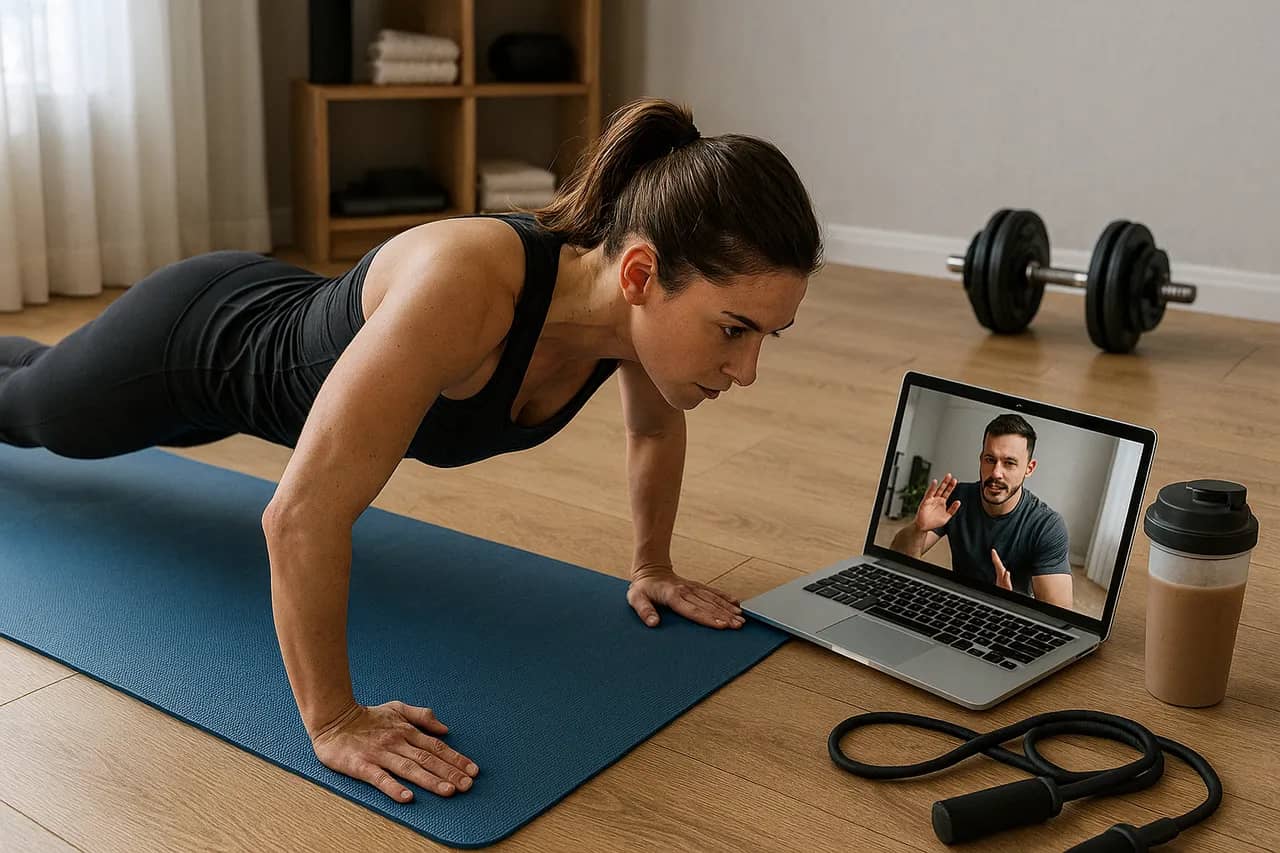
Feeling stuck in a fitness rut or struggling to find a “gym near me” that fits your schedule? You're not alone. Whether juggling work, family, or travel, Online Coaching is a flexible way for clients to access coaching services and the support they need to reach their goals. At SympathiQ, we connect you with certified personal trainers, so you can train from anywhere in the world with an internet connection and access personalised home workouts, cardio routines, strength training, yoga, and more.
In this in‑depth guide, you'll learn:
Why online coaching beats the traditional gym membership
How to find the perfect personal trainer near me or join fitness classes online
Crafting a full-body workout plan at home with minimal equipment
Key cardio and strength training routines for every level
Mind‑body practices like yoga and Pilates to complement your workouts
Tips for staying motivated—indoors or out with outdoor fitness motivation
FAQs and common misconceptions about virtual training
Next steps and resources to keep you moving forward
Ready to revolutionise your fitness? Let's dive in!
Traditional gyms can be crowded, have limited hours, or be inconveniently located. With online coaching, you get a more adaptable alternative to in person coaching and decide when and where to work out—a 6 am HIIT session in your living room, a lunchtime Pilates flow in your office, or a late‑night strength circuit in your bedroom. No more battling for machines, rushing between work and the gym, or missing sessions because of traffic, so you can expect easier scheduling and the freedom to train from almost anywhere.
One‑size‑fits‑all workout plans rarely deliver results. SympathiQ trainers design home workout programs tailored to your unique goals—fat loss, muscle gain, improved mobility, sport‑specific performance, or personal development. They assess your current fitness level, available equipment, schedule, preferences, and basic computer skills to craft sessions that challenge you without overwhelming you. For example:
Your trainer can build a progressive strength routine if you have a pair of dumbbells and a resistance band.
They'll program push‑up variations, lunges, and core circuits if you prefer bodyweight moves.
For cardio lovers, they'll mix HIIT, steady‑state runs, and low‑impact options.
Studies show that people who train with a coach are likelier to stick with their routines¹. Your SympathiQ trainer provides:
Real‑time feedback on form via video check‑ins
Weekly progress reviews with metrics like weight, reps, and workout adherence
Motivational support through messages, calls, scheduled check‑ins, and tailored advice
This accountability keeps you on track, even when motivation dips, and regular talking with a coach can promote better adherence. You'll know someone is rooting for you, will hear your concerns, and adjust guidance, and that you owe it to yourself to show up.
Monthly gym fees, personal training add‑ons, and travel costs add up quickly. Online coaching is often cheaper, especially when choosing small‑group or semi‑private sessions, and some trainers let you pay per coaching session or choose monthly support. Plus, you save on commute time and childcare, which matters for busy schedules. That means more time (and money) for life's other priorities—while still getting expert guidance.
2. Finding Your Ideal Trainer or Class Near You
A quick search for “gym near me” gives you facility listings, but quality instruction is not guaranteed. SympathiQ's directory lets you filter trainers by specialty (e.g., strength training routines, Pilates classes online, cardio workouts for beginners), location (for hybrid or in‑person options in London or other UK cities), and availability.
Look for certifications from recognised bodies like NASM, ACE, or UKSCA. Many SympathiQ trainers hold additional qualifications in:
Pilates and yoga for strength and flexibility
Sport‑specific conditioning (e.g., running, cycling)
Pre and post‑natal training
Rehabilitation and injury prevention
Trainer profiles include client reviews, sample workouts, and short intro videos so you can gauge their style and assess fit before joining a coach’s practice.
Most trainers offer a complimentary 20‑minute consultation. Use this to discuss your goals, ask about their personal trainer course background, and get a feel for their communication style. Then choose from:
Single drop‑in sessions to test the waters
4‑ or 8‑week transformation packages for focused progress
Ongoing monthly coaching for long‑term support
Suppose you love your local gym but want expert programming. In that case, many SympathiQ trainers offer hybrid plans, such as designing workouts you execute in person at your gym and then reviewing form and progress online. This combines the best of both worlds.
You don't need a full commercial gym at home. Start with:
Resistance bands (light, medium, heavy)
A pair of adjustable dumbbells or kettlebells
A yoga mat or padded surface
Optional: pull‑up bar, jump rope, stability ball
Even bodyweight‑only programs can yield dramatic results when structured intelligently. Your trainer will adjust variables like tempo, rest periods, and exercise selection to keep you progressing.
Monday – Lower Body & Core
Squats: 3×12
Lunges: 3×10 each leg
Glute bridges: 3×15
Planks: 3×30 s
Wednesday – Upper Body & Core
Push‑ups (knees or full): 3×8–12
Bent‑over rows (bands or dumbbells): 3×12
Shoulder taps: 3×20
Hollow holds: 3×20 s
Friday – Full Body & Cardio
Jump squats: 3×15
Mountain climbers: 3×30 s
Renegade rows: 3×10 each side
Burpees: 3×10
Rest 60–90 seconds between sets. Modify reps/weights as you progress.
For a detailed breakdown and video demos, check our Home Workout Programs.
Brisk walking or marching in place: great for beginners or joint concerns
Step‑aerobics on a stair or platform: boosts heart rate without pounding
Stationary bike or elliptical (if available): smooth, controlled cardio
Short bursts of maximum effort followed by recovery. Examples:
30 s sprint in place, 30 s rest × 10 rounds
20 s high knees, 10 s rest × 8 rounds
40 s jump rope, 20 s rest × 5 rounds
HIIT burns calories, improves cardiovascular health, and fits into busy schedules—often under 20 minutes.
For endurance, choose a moderate pace you can sustain for 30–60 minutes:
Jogging or cycling outdoors
Swimming laps
Dance cardio routines
Steady‑state sessions build aerobic capacity and aid recovery when alternated with HIIT.
When weather allows, take your workout outside:
Trail running for varied terrain and mental freshness
Stair sprints on local steps
Park bench circuits (step‑ups, triceps dips, incline push‑ups)
Fresh air, sunshine, and changing scenery boost mood and adherence.
For more outdoor ideas, see our Outdoor Fitness Motivation.
To build strength, you must gradually increase:
Weight (dumbbells, bands tension)
Reps (add 1–2 reps per week)
Sets (add an extra set after 4–6 weeks)
Time under tension (slow down the lowering phase)
Your trainer will periodize your program, alternating volume, intensity, and exercise selection to avoid plateaus.
Upper Body Day:
Dumbbell bench press: 4×8–10
One‑arm row: 4×10–12 each side
Overhead press: 3×8–10
Superset biceps curls + triceps extensions: 3×12 each
Lower Body Day:
Romanian deadlift: 4×10–12
Goblet squat: 3×12–15
Bulgarian split squat: 3×10–12 each leg
Calf raises: 3×15–20
Train 4 days per week, alternating upper and lower days, with rest or active recovery between sessions.
If you lack heavy dumbbells, use:
Backpack loaded with books for squats and lunges
Water jugs as kettlebell substitutes
Towel rows under a door for back work
Chair dips for triceps
Creativity ensures you never run out of resistance options.
Yoga complements strength training by improving mobility, balance, and mind‑body awareness. Online Pilates classes and yoga flows you can try:
Vinyasa flow: dynamic sequences linking breath to movement
Hatha yoga: slower-paced poses focusing on alignment
Yin yoga: long holds for deep connective tissue release
SympathiQ offers live Pilates classes online with certified instructors, ideal for core control and posture.
Pilates emphasizes controlled movements to strengthen the deep core muscles. Foundational exercises include:
The Hundred
Single‑leg stretch
Teaser
Swan dive
These moves enhance spinal stability and translate to better performance in other workouts.
Set SMART Goals: Specific, Measurable, Achievable, Relevant, Time‑bound.
Track Your Progress: Use a fitness app or simple journal to log workouts, weights, and mood.
Join Online Communities: Join a supportive community where members can encourage each other, and some coaches also run challenges, live events, or small online spaces for accountability.
Mix It Up: Rotate between cardio, strength, yoga, and outdoor workouts to avoid boredom.
Celebrate Milestones: Reward yourself (new workout gear, massage) when you hit mini‑goals.
Visualise Success: Spend a minute daily imagining how you'll feel after hitting your next target.
For more on habit formation, read our Fitness Tips for Beginners.
Protein (25–30% of calories): chicken, fish, tofu, legumes
Carbs (40–50%): whole grains, fruits, starchy veggies
Fats (20–30%): avocado, nuts, olive oil
Adequate protein supports muscle repair, while carbs fuel workouts and fats aid recovery.
Pre‑workout: banana and peanut butter, oatmeal with berries
Post‑workout: protein shake, Greek yogurt with fruit, turkey sandwich
Timing nutrients around your sessions accelerates recovery and performance.
Q1: Do I need a personal trainer to see results?A: No, but expert guidance accelerates progress and ensures safe form. Online coaches provide that expertise at a fraction of in‑person costs.
Q2: Can I build muscle with home workouts?A: Absolutely. Progressive overload—adding reps, sets, or resistance—can stimulate muscle growth without a gym.
Q3: Is online coaching just pre‑recorded videos?A: No—SympathiQ combines live sessions, personalised plans, direct contact with your coach, and tailored advice. It offers interactive coaching services, not passive content.
Q4: How often should I train?A: Aim for 3–5 weekly sessions, mixing strength, cardio, and flexibility work. Rest days are equally crucial for recovery.
Q5: What if I miss sessions?A: Life happens. Trainers adjust your plan around work, family, or career demands and help you get back on track—no guilt, just solutions.
American Council on Exercise: Benefits of Personal Training
NHS Physical Activity Guidelines: nhs.uk/live-well/exercise
British Journal of Sports Medicine: Home‑based Exercise Evidence
These sources offer evidence‑based guidance to complement your SympathiQ coaching.
Ready to transform your fitness journey? With online coaching from SympathiQ, you'll get the personalised support, accountability, and expert programming you need—whether you're searching for a personal trainer in London, craving home workouts, or eager to join fitness classes online.
Next steps:
No more excuses—your best self is waiting. Let's get moving!
Your email address will not be published. Required fields are marked *