Subscribe to Our Newsletter
To get the latest tips and news to support your well-being journey!


You are not lazy, failing or simply bad at coping if your brain feels foggy by 11am, your inbox makes your chest tighten, and even rest does not seem to touch the tiredness. This is exactly why online burnout recovery coaching is gaining attention - it gives people structured support before stress hardens into something that affects every part of life.
Burnout rarely arrives all at once. It tends to build quietly through overwork, blurred boundaries, emotional strain and the habit of carrying on because there is always one more thing to finish. For many adults, especially busy professionals, the hardest part is not spotting that something is wrong. It is admitting that pushing harder is no longer working.
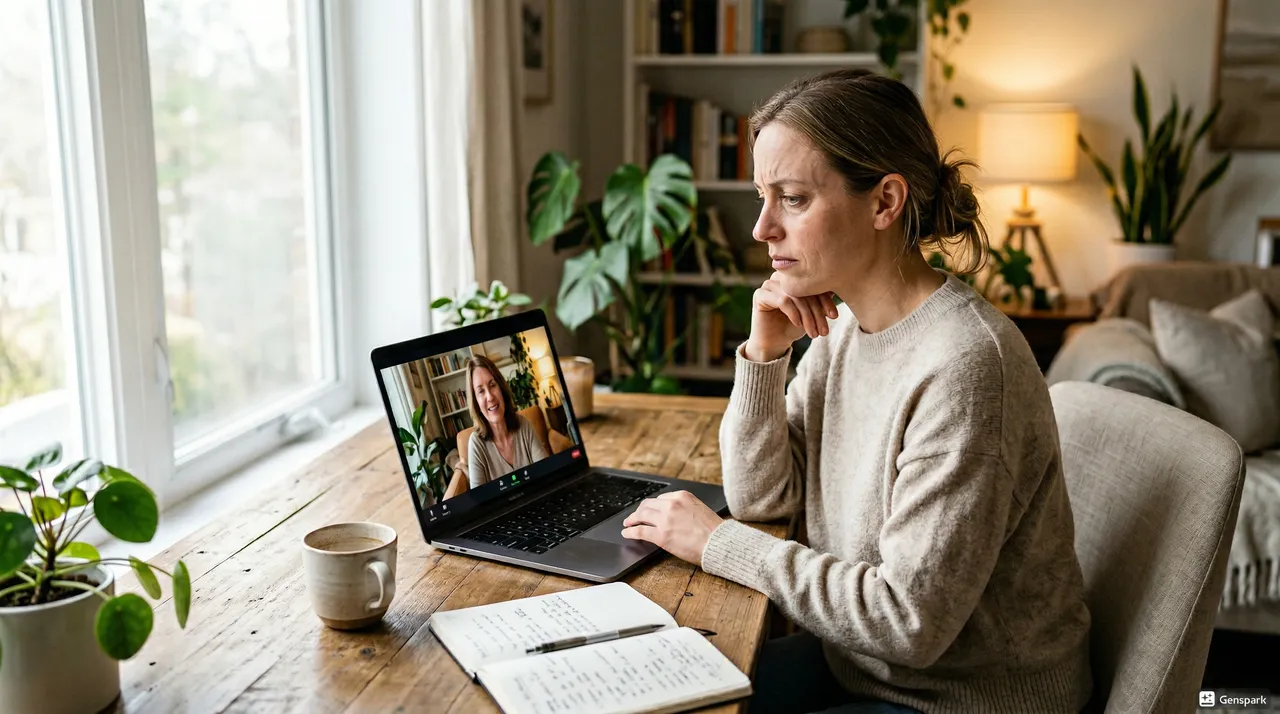
Burnout coaching is not just a weekly reminder to take a bath, go for a walk or switch off your phone. Good coaching looks at how you got here, what keeps the cycle going, and what needs to change so recovery is possible in real life rather than only in theory.
Online burnout recovery coaching gives you access to that process in a format that fits around work, family and existing commitments. Sessions are usually held virtually, which means less time travelling and more flexibility when energy is already low. That convenience matters more than it may seem. When you are burnt out, even small bits of friction can stop you from asking for help.
A coach may help you identify early warning signs, rebuild routines, set realistic boundaries, review work patterns, and understand the difference between healthy effort and chronic depletion. Depending on the practitioner, coaching may also include accountability, goal setting and practical tools to reduce overwhelm.
What it does not do is replace every other form of support. If burnout is tied to anxiety, depression, trauma or a workplace crisis, therapy, medical advice or HR support may also have a role. The most effective care is often holistic, not one-dimensional.
One of the biggest barriers to recovery is the belief that getting help must be another project to manage. Researching providers, waiting for appointments, commuting to sessions and fitting everything around work can make support feel out of reach. Online care reduces that burden.
It also creates privacy. Many people want support but do not want to explain repeated absences from work or be seen entering a clinic in the middle of the day. Virtual sessions offer more discretion, which can make it easier to take the first step.
Then there is consistency. Burnout recovery is rarely solved in one conversation. It usually improves through small changes repeated over time - sleeping a bit better, noticing stress sooner, reducing people-pleasing, eating more regularly, and learning how to stop treating every task as urgent. Online coaching makes those ongoing check-ins easier to maintain.
There is a trade-off, though. Some people find online sessions less grounding than in-person support. If home is noisy, shared or stressful, it can be hard to reflect properly. Others struggle with screen fatigue and want a break from digital spaces. In those cases, the right solution may still be online, but it needs to be thoughtfully structured.
Burnout can look different from person to person, but there are common patterns. You may feel exhausted after tasks that used to be manageable. You may be more irritable, detached or tearful than usual. Work might feel meaningless even if you once cared deeply about it. Rest can leave you feeling guilty rather than restored.
Sometimes the signs are physical. Headaches, disrupted sleep, digestive issues, tension and a constant wired feeling often show up before people connect the dots. For others, burnout appears as numbness. You are still functioning, still meeting deadlines, still showing up - but without any real sense of energy or presence.
If you keep telling yourself that things will calm down after this week, this project or this deadline, and that moment never comes, that is worth taking seriously.
Not all support is equal, and burnout is too personal for a one-size-fits-all approach. A good coach should help you feel understood without overpromising quick fixes. Recovery can absolutely happen, but it is usually not linear.
Look for someone who is clear about their approach. Do they focus on behaviour change, nervous system regulation, workplace boundaries, mindset patterns or lifestyle habits? None of these is wrong, but the fit matters. If your burnout is mostly driven by impossible workloads and people-pleasing, generic positivity will not help much.
It is also worth checking whether the platform or practitioner offers a wider support ecosystem. Burnout often overlaps with sleep issues, low mood, poor nutrition, inactivity or relationship strain. Being able to access joined-up care can make recovery feel more coherent. This is where a holistic platform such as SympathiQ can be useful, because it allows people to seek support across mental wellbeing, coaching and lifestyle needs in one place.
Practical details matter as well. Transparent pricing, secure booking, clear privacy standards and flexible scheduling are not extras. They are part of what makes support feel safe and sustainable.
Many people assume coaching starts with a dramatic breakthrough. More often, it begins with relief. Someone asks the right questions, and for the first time in a while, you stop performing competence and say what is actually happening.
Early sessions often focus on understanding your current state. What is draining you? What are you still forcing? Where are your boundaries weakest? What have you normalised that is no longer workable? Naming these patterns clearly can be surprisingly powerful.
From there, the work becomes practical. You might track energy rather than productivity. You might create a realistic workday shutdown routine, plan recovery time without turning it into another target, or practise saying no before resentment builds. You may also be encouraged to notice the beliefs beneath burnout, such as tying your worth to output or feeling responsible for everyone else's comfort.
Progress can feel subtle at first. You may not wake up transformed, but you might stop dreading Monday quite as much. You might sleep through the night more often. You might catch yourself before overcommitting. Those shifts are not small. They are evidence that your system is beginning to trust that it does not have to stay on high alert.
Burnout sits at the intersection of mind, body and environment, which is why the right support depends on context. Coaching can be particularly helpful if you are functional but depleted, aware that something needs to change, and ready to work actively on habits, boundaries and decision-making.
If you are experiencing severe depression, panic, trauma symptoms or thoughts of self-harm, coaching alone is unlikely to be enough. In that situation, clinical mental health support should come first. There is no failure in needing a different level of care. The goal is not to fit yourself into a service. The goal is to get support that matches what you are carrying.
That is also why integrated care matters. Recovery may involve coaching, therapy-style support, better sleep, movement, nutrition and changes to workload. Burnout is rarely caused by one thing, so it often improves best through a combination of changes.
If you are curious about online burnout recovery coaching, try not to turn the search into another pressure point. You do not need the perfect practitioner, the perfect schedule or the perfect explanation for why you are struggling. You just need a starting point.
Begin by noticing what you need most right now. Is it emotional support, practical structure, accountability, or help rebuilding your daily rhythm? A clear answer will make it easier to choose the right kind of specialist.
Then keep your first goal small. Book one conversation. Ask how the coach works. Find out how sessions are structured and what progress tends to look like. The aim is not to solve burnout in a week. It is to move from surviving on autopilot to receiving support that actually fits your life.
You do not have to wait until everything falls apart to take burnout seriously. Sometimes the most powerful step is simply allowing yourself to be helped before exhaustion becomes your normal.
Your email address will not be published. Required fields are marked *