Subscribe to Our Newsletter
To get the latest tips and news to support your well-being journey!


You do not usually need more advice. You need a clearer next step, someone to help you follow through, and support that fits around work, family and the rest of life. That is why goal based coaching online has become such a practical option for people who want real progress without adding more pressure to an already full week.
For many adults, the hardest part is not knowing that something needs to change. It is knowing where to start, how to stay consistent, and what to do when motivation dips. Online coaching can help with that, but only when it is built around meaningful goals rather than vague encouragement.
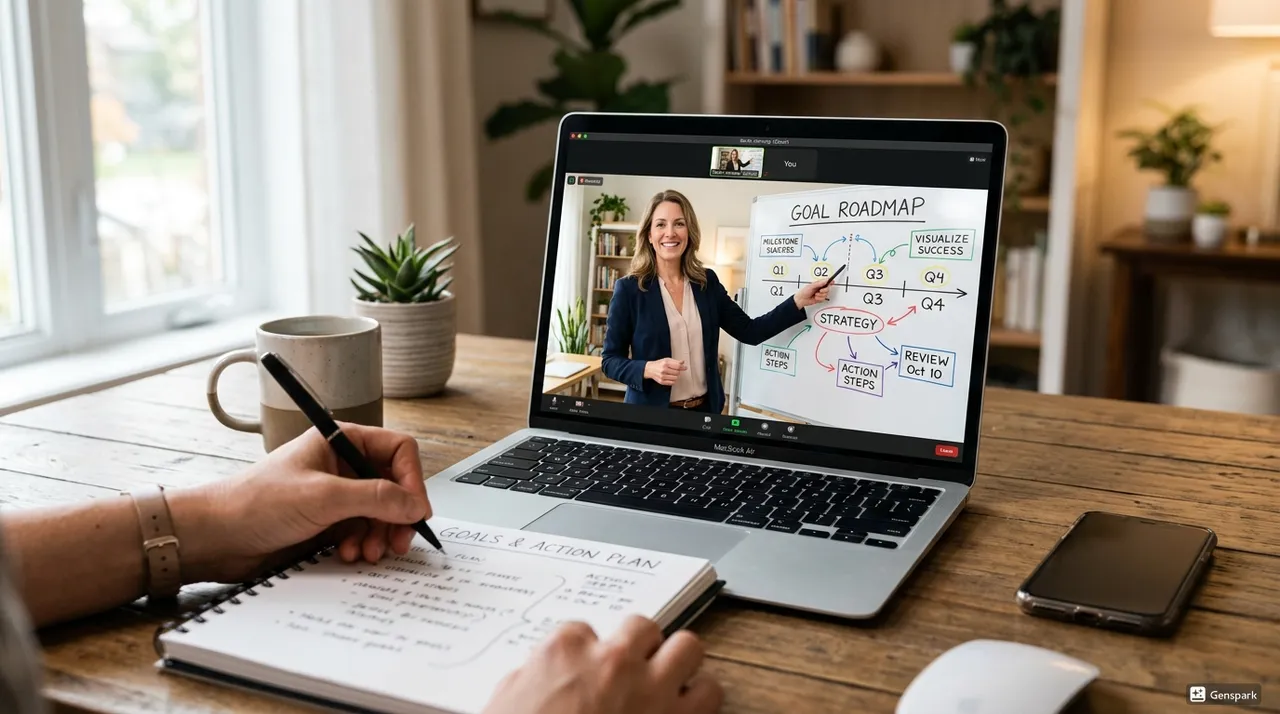
At its simplest, goal based coaching online is structured support delivered remotely, with sessions focused on a specific outcome you want to reach. That outcome might be better stress management, improved confidence, healthier habits, clearer boundaries, stronger communication, or a more balanced routine.
The key difference is in the method. Rather than talking in broad terms about wanting life to feel better, you work with a specialist to define what better looks like in your situation. The process becomes more concrete. You identify where you are now, where you want to be, what is getting in the way, and what small actions are realistic between sessions.
That structure matters. Goals give coaching direction, but they also give you something equally valuable - evidence of progress. When life feels messy, measurable change can be reassuring. It helps you see that growth is happening, even if it is gradual.
There was a time when remote support felt like a compromise. For many people now, it feels like the better option.
Online coaching removes much of the friction that stops people getting help in the first place. You do not have to factor in travel, waiting rooms or rearranging a full day around a single appointment. If you are juggling deadlines, parenting, shift work or caring responsibilities, that convenience is not a luxury. It is often the reason support becomes possible.
There is also a privacy benefit. Some people find it easier to speak openly from home or another familiar space. That can matter when the topic is burnout, low mood, confidence, relationships or behaviour patterns you have been carrying for years. Feeling safe enough to be honest makes the work more effective.
The online format also tends to support continuity. If you travel often, work irregular hours or simply need flexibility, virtual sessions are easier to keep up. Consistency is one of the biggest predictors of change, and convenience helps protect it.
Not every challenge needs the same kind of support, and that is an important distinction. Coaching is particularly useful when you want to move forward, build skills, create healthier patterns or make a specific area of life feel more manageable.
That might mean reducing overwhelm at work, rebuilding energy after burnout, improving sleep routines, developing confidence in social settings, or staying accountable to nutrition and fitness goals. It can also help with personal development goals that are harder to define at first, such as feeling more grounded, more decisive or less reactive.
What matters is that the goal can be explored, broken down and worked on over time. If you are dealing with severe mental health symptoms or a crisis, a different level of care may be more appropriate. Good coaching does not pretend to be everything. It works best when the support matches the need.
The best online coaching is not about being told what to do. It is collaborative. You bring your priorities, your pace and your lived experience. The coach brings perspective, structure, challenge and support.
A good process usually starts by getting specific. Saying you want to feel better is understandable, but it is too broad to guide action. Saying you want to stop checking emails after 8 pm, feel calmer before meetings, or go through a week without skipping meals gives you something you can actually work with.
From there, sessions often focus on patterns and obstacles. What keeps happening? What triggers the current behaviour? What beliefs are shaping your decisions? What practical constraints are real, and which ones are habits that can shift? This is where online coaching can be surprisingly powerful. It combines reflection with movement.
Between sessions, you may agree on a few focused actions rather than a long list of tasks. That could be tracking one behaviour, testing a new routine, practising a communication skill, or noticing when stress tends to peak. Small actions are not a sign that the goal is small. They are how sustainable change is built.
This is where some people hesitate, and fairly so. The phrase goal based can sound rigid, as if every session must be neat, productive and measurable. Real life is rarely like that.
A good coach knows that progress is not always linear. Some weeks you move quickly. Some weeks you realise the original goal was not the real issue. Sometimes your priority shifts because work becomes intense, family needs change, or your energy drops. That does not mean the process has failed. It means the coaching should adapt.
The most effective goal based coaching online balances structure with humanity. You need enough clarity to keep moving, but enough flexibility to respond to real life. If a coaching approach feels overly scripted, it may not give you the space needed for honest growth.

Finding the right fit matters more than finding the most polished profile. Qualifications, experience and clear specialisms are important, but so is whether the coach understands the kind of change you are trying to make.
Start by looking at their area of focus. Someone who works with burnout recovery may not be the right person for relationship communication, just as a nutrition specialist may not be the best fit for confidence issues at work. Holistic support can be especially helpful if your goals overlap across mental wellbeing, physical health and daily habits, because in real life those areas often affect each other.
It is also worth paying attention to how the support is delivered. Is booking straightforward? Are sessions secure and confidential? Can you find times that actually work around your schedule? Is there clarity around pricing and what happens next? These practical details shape whether support feels sustainable.
Platforms such as SympathiQ are designed around that full journey, making it easier to find specialist support, book online, and continue care in one place. For people who want personalised help without extra admin, that joined-up experience can make a real difference.
Progress in coaching is not always dramatic. Often it shows up in quieter ways first.
You may notice that you recover faster after a stressful day. You start making decisions with less second-guessing. You follow through on a commitment you would normally avoid. You understand your patterns more clearly and feel less ruled by them. The goal may still be in progress, but your relationship with it changes.
That is one reason measurable goals and reflective support work well together. Metrics alone can miss the emotional shifts that matter, while reflection alone can feel abstract. The combination helps you see both the practical and personal side of change.
If you are waiting to feel fully ready before getting support, you may wait a long time. Most people start coaching because something is not working as well as it could, not because they have everything neatly defined.
Online coaching is worth considering when you want focused support, a clearer path and accountability that feels encouraging rather than heavy-handed. It can be especially valuable if you are capable in many areas of life but feel stuck in one that keeps draining your energy.
The right support does not change your life overnight. It helps you build change in a way that respects your pace, your responsibilities and your goals. That is often what makes it last.
If you have been carrying the same intention from month to month, a helpful next step may not be trying harder on your own. It may be choosing support that turns intention into action, one honest conversation and one realistic step at a time.
Your email address will not be published. Required fields are marked *